

 Shipment Monitoring
 OnSite Monitoring
 Vehicle Monitoring
 Success Stories
 Biopharma
 Reproductive Medicine / IVF
 Animal Health
 Logistics
 Laboratories
 Cryogenic
 Dry Ice / ULT
 Cold Chain
 CRT
CRT Realtime Monitoring
 Wireless Monitoring
 Passive Monitoring
 Connected Shippers
 Tec4Cloud Platform
 Tec4Cloud Features
 Tec4App Mobile
 Calibration Services
 Control Tower
 24/7/365 Support
 Quality Management
 Airline Approvals
 Downloads
 Career
 Newsletter
Reliable Ultra-Low Temperature Protection for Critical Shipments and Storing
Maintain full visibility and control of shipments and storage solutions at temperatures down to -78,5 °C
Ensure full visibility!
Ensuring Safe Dry Ice Logistics
with Real-Time Monitoring
Dry ice (solid CO₂) provides powerful cooling by sublimating directly from a solid into gas. During this process, it absorbs a large amount of heat and maintains an ultra-low temperature of −78.5 °C, making it ideal for highly temperature-sensitive goods.
Unlike conventional cooling media, dry ice does not melt into a liquid, which means no residue, no leakage, and no additional moisture during transport. In addition, dry ice continuously sublimates, which means cooling capacity decreases over time and must be carefully calculated. Due to CO₂ release, shipments using dry ice must also comply with strict safety and regulatory requirements, especially for air freight.
The most common use of dry ice is in the shipment of ultra-frozen pharmaceuticals, biological samples, and cell & gene therapies, where stable deep-cold conditions are critical.
Connected Dry-Ice Packaging

Connected Dry-Ice Packaging
Dry Ice
Use case
Dry-ice (−78.5 °C) shipments
Applications
For single-use and multi-use applications
Recommended Monitoring Devices
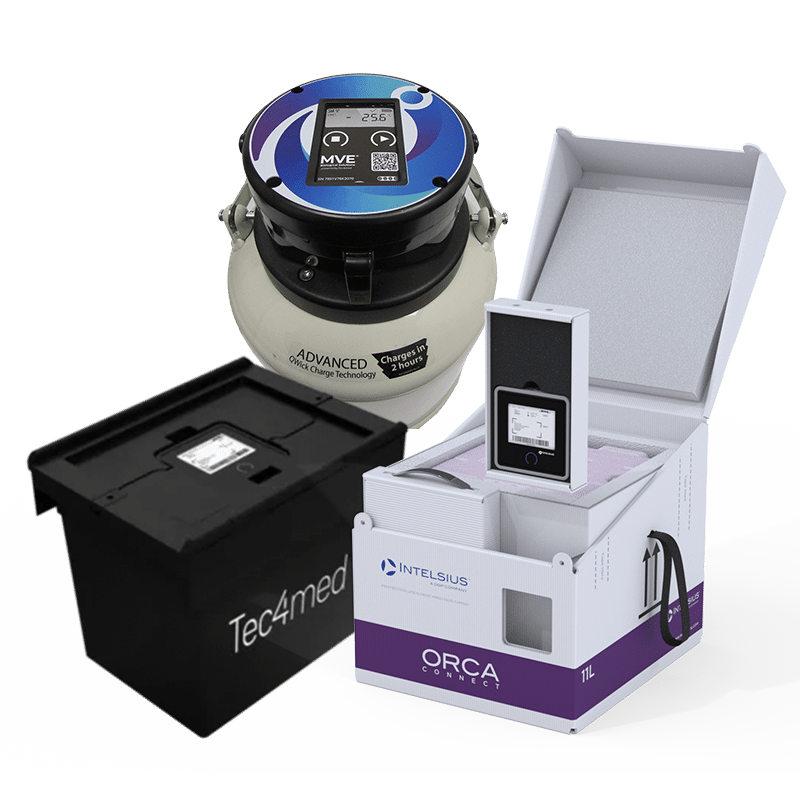
SmartTag SP or MP for Real-Time Monitoring, CryoBeacon with Probe
Data Readout
via Tec4App / SmartHub
Industries
Laboratory, Biopharma, Pharma Logistics, CRO
Our Connected Shippers for Dry Ice Shipping
Our Connected Dry Ice Shippers combine proven ultra-low temperature protection with intelligent condition monitoring technology, ensuring complete transparency throughout transport and storage. Integrated sensors and real-time tracking provide continuous visibility into critical shipment conditions, helping safeguard product quality.
With live data on temperature, location, humidity, shock events, and access status, connected solutions enable proactive supply chain management, reduce product loss, and optimize logistics performance for pharmaceutical, biotech, and laboratory applications.
Protection through Connected ULT Freezers
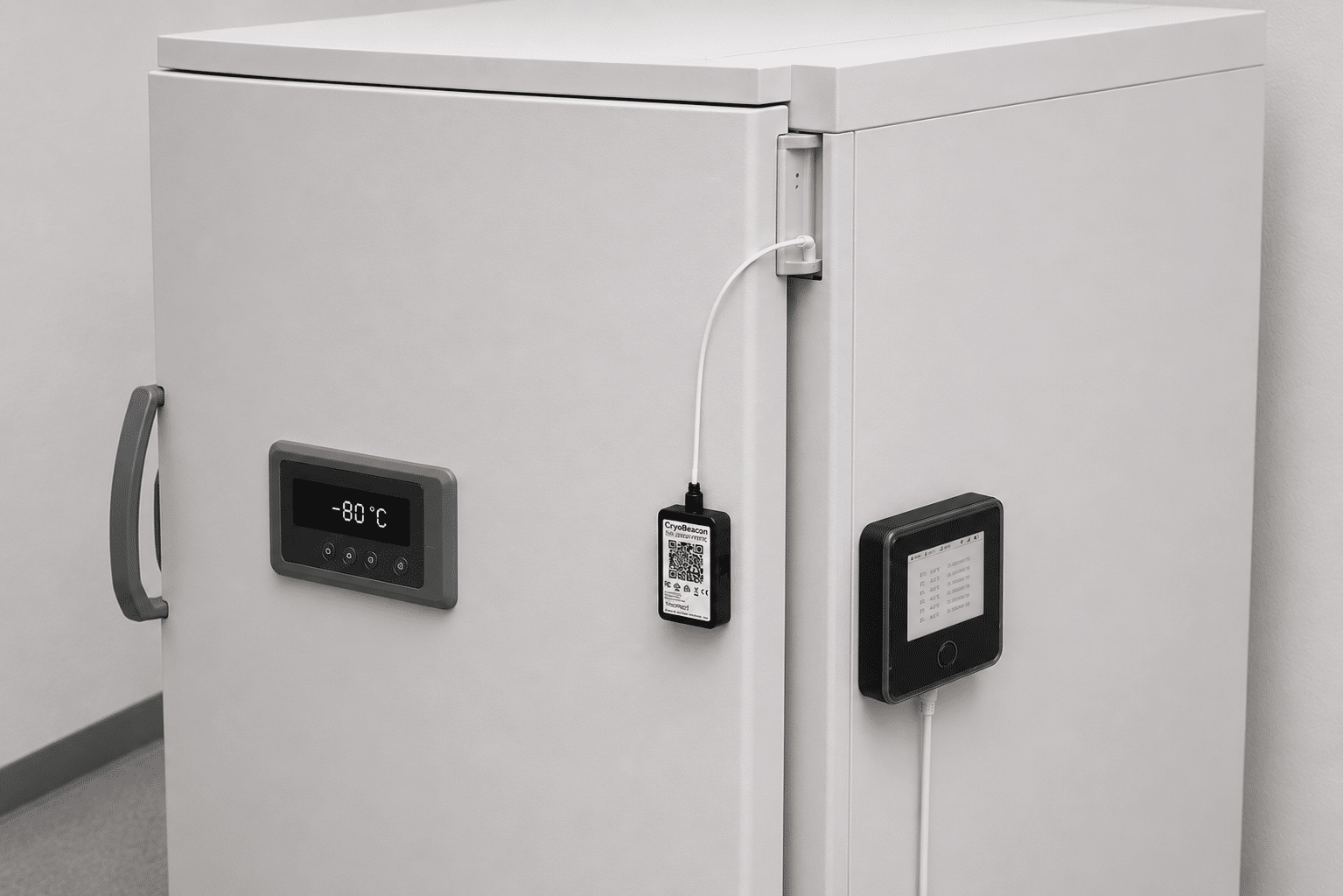
Gain continuous visibility into your ultra-low temperature freezers from one central platform. Tec4med connects temperature data, alarms, reports, and users to detect deviations quickly and simplify documentation. Monitor critical storage conditions in real-time, supported by instant alerts and centralized reporting. Giving you the transparency you need to respond even faster and maintain reliable oversight of temperature-sensitive samples.
Advantages of Dry Ice in Cold Chains
Monitoring Critical Temperature Zones
Gamete & embryo cryopreservation: e.g. vitrified oocytes, cryopreserved embryos, sperm samples, ovarian tissue, testicular tissue
Fertility biobanking & long-term storage: e.g. donor egg/sperm bank inventories, fertility preservation samples for oncology patients, research embryos, stem cell lines derived from reproductive tissue
Reproductive tissue transport: e.g. inter-clinic embryo transfer, donor gamete shipment, reciprocal/cross-border IVF transport, egg and sperm bank distribution
Genetic testing & diagnostics: e.g. PGT-A/PGT-M embryo biopsies, karyotyping samples, carrier screening specimens, prenatal genetic testing samples
Reagents & culture media: e.g. cryoprotectant solutions, embryo culture media, vitrification/warming kits, enzymatic reagents for IVF labs
Biobanking & specimen transport: e.g. clinical trial specimens for reproductive research, tissue biopsies, DNA/RNA extraction samples, research-grade reproductive cell lines
Fertility medications & hormones: e.g. gonadotropins (FSH/LH), GnRH agonists/antagonists, hCG trigger medication, progesterone luteal support
Andrology & lab consumables: e.g. sperm wash media, IUI/IVF preparation reagents, semen analysis quality controls, cryoprotectant working stocks
Last-mile patient & clinic delivery: e.g. take-home stimulation medication kits, at-home hormone injections, courier delivery of fertility drugs to patients, clinic-to-clinic reagent restocking
Pharmaceutical products: e.g. temperature-sensitive tablets, capsules, injectables, specialty medicines, hospital pharmacy supplies
Clinical trial materials: e.g. investigational medicinal products, patient kits, comparator drugs, site-to-site trial supplies
Medical goods & healthcare products: e.g. temperature-sensitive medical devices, treatment kits, care supplies, hospital and clinic stock
Smart Monitoring Devices
for Dry Ice Shipments and Storage
Frequently Asked Questions About Tec4med's Expertise in
Dry Ice Real-Time Monitoring
Dry ice is the solid form of carbon dioxide (CO₂) and provides cooling at an ultra-low temperature of −78.5 °C. Unlike traditional cooling materials, it sublimates directly from a solid into a gas, absorbing large amounts of heat without producing liquid residue. This makes dry ice an effective and clean cooling solution for temperature-sensitive products during transport and storage.
Dry ice offers several key benefits for deep-cold logistics applications:
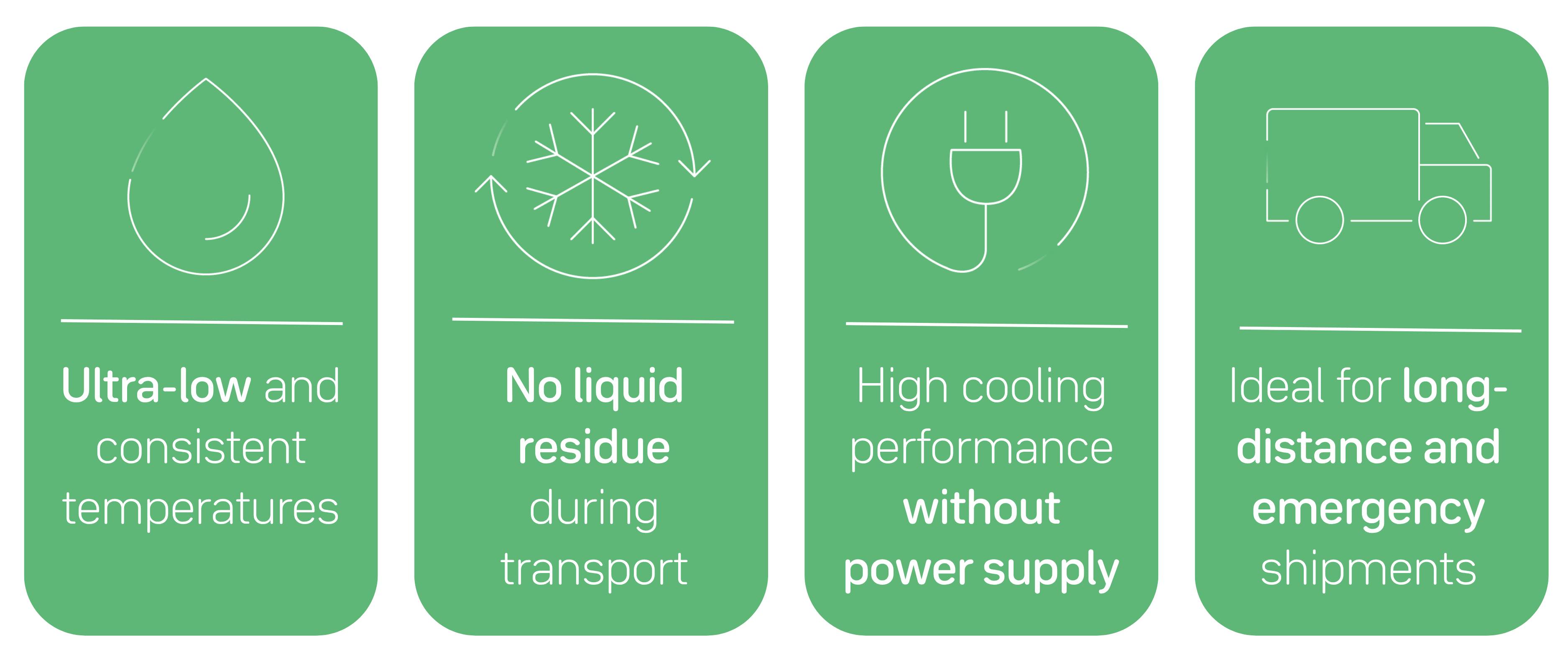
- Ultra-low and stable temperatures down to −78.5 °C
- No liquid residue or leakage during transport
- High cooling performance without requiring a power supply
- Suitable for long-distance transportation
- Ideal for emergency and time-critical shipments
- Reliable protection for highly temperature-sensitive products
Dry ice and phase change materials (PCM) are both used in cold chain logistics, but they serve different temperature ranges.
- Dry ice maintains temperatures of −78.5 °C and is ideal for ultra-frozen products.
- PCM solutions are engineered to maintain predefined temperature ranges, such as 2 to 8 °C, 15 to 25 °C, or frozen conditions, depending on the application.
While PCM offers controlled temperature stability within a specific range, dry ice is preferred when deep-cold or cryogenic conditions are required.
Dry ice is commonly used to ship products that require deep-cold temperatures, including:
- Vaccines
- Cell and gene therapies
- Biological samples
- Clinical trial materials
- Active pharmaceutical ingredients (APIs)
- Laboratory specimens
- Biopharmaceutical products
- Temperature-sensitive healthcare materials
Its ability to maintain ultra-low temperatures makes it ideal for products where quality and efficacy depend on strict temperature control.
Dry ice logistics solutions are widely used across industries that depend on reliable ultra-low temperature control, including:
- Pharmaceutical and biotech companies
- Vaccine manufacturers and distributors
- Cell & gene therapy providers
- Clinical research organizations (CROs)
- Laboratories and diagnostic facilities
- API (Active Pharmaceutical Ingredient) manufacturers
- Healthcare and life sciences logistics providers
- Biological sample and specimen transport services
Tec4med offers intelligent monitoring solutions specifically designed for dry ice applications:
- CryoBeacon for manual data readout via the Tec4App or SmartHub gateway
- SmartTag SP and MP for real-time monitoring
Tec4med's Connected Dry-Ice Packaging combines high-performance dry ice shippers with intelligent monitoring technology for complete supply chain transparency.
Available solutions include:
- Dry-ice packaging for temperatures down to −78.5 °C
- Single-use and multi-use shipper configurations
- CryoBeacon-enabled packaging with app-based data retrieval
- SmartTag SP and SmartTag MP equipped packaging for real-time tracking and monitoring
Yes. With Tec4med's SmartTag SP and SmartTag MP, dry ice shipments can be monitored in real time throughout transport and storage. Depending on the selected solution, users can gain visibility into:
- Temperature conditions
- Shipment location
- Humidity levels
- Shock and handling events
- Access and opening status
Yes. Dry ice is widely used for long-distance and international shipments because it delivers high cooling performance without requiring an external power source. When the correct amount of dry ice and appropriate insulated packaging are used, products can be protected throughout extended transit times while maintaining ultra-low temperatures.
Yes. Dry ice is classified as a Class 9 Miscellaneous Dangerous Good (UN 1845) for air transport because it releases carbon dioxide gas as it sublimates. As a result, shipments containing dry ice must comply with applicable transportation regulations and labeling requirements, particularly for air freight.
As dry ice sublimates, it releases carbon dioxide gas that can accumulate in enclosed areas. For this reason, dry ice shipments require properly vented packaging and must comply with transportation regulations. Special precautions help ensure safe handling and the protection of products and logistics personnel throughout the supply chain.