

 Shipment Monitoring
 OnSite Monitoring
 Vehicle Monitoring
 Success Stories
 Biopharma
 Reproductive Medicine / IVF
 Animal Health
 Cryogenic
 Dry Ice
 Cold Chain
 CRT
CRT Realtime Monitoring
 Wireless Monitoring
 Passive Monitoring
 Connected Shippers
 Tec4Cloud Platform
 Tec4Cloud Features
 Tec4App Mobile
 Calibration Services
 Control Tower
 24/7/365 Support
 Quality Management
 Airline Approvals
 Downloads
 Career
 Newsletter
From Temperature Mapping to
Full Warehouse Transparency
Turning Warehouse Data into Quality Assurance at
Single Use Support
Optimizing Warehouse Quality

Lack of Transparency in Temperature Monitoring
Single Use Support stores materials for the production of single-use assemblies in its warehouses and places great emphasis on continuously improving its processes. In the past, there were opportunities – particularly in the area of warehouse environments – to optimize workflows and further increase efficiency.
A key focus was on creating greater transparency regarding the actual temperature trends in the individual storage areas, as these had previously not been systematically recorded. The lack of transparency regarding temperature fluctuations made it difficult to ensure compliance with specifications and to identify potential impacts on product quality and product safety at an early stage. Particularly with regard to clearly defined storage conditions for certain products – for example, a temperature range of +20°C with a permissible deviation of ±5°C – significant potential for improvement became apparent here.
Transparent Temperature Monitoring During Ongoing Warehouse Operations
To ensure reliable and verifiable compliance with the defined storage conditions in the future, we first conducted a comprehensive temperature mapping in the storage areas of Single Use Support using our equipment. The goal of this initial phase was to systematically evaluate the various storage areas, categorize temperature zones, and clearly identify hot and cold spots. The findings then served as the basis for determining suitable storage locations and developing targeted measures.
Based on the results of the temperature mapping, a permanent on-site temperature monitoring system was subsequently integrated into the regular warehousing processes. For the implementation, Single Use Support opted to use TempBeacons and SmartHubs. In addition, additional TempBeacons were provided for testing and qualification purposes. Centralized data collection and management were then to be handled via the Tec4Cloud software platform, which enables transparent, tamper-proof, and auditable documentation of all temperature data.
The implementation process began with a structured onboarding session led by our team. During this session, the Single Use Support team received a comprehensive introduction to the Tec4Cloud environment, including how to correctly set up devices and locations in the cloud, as well as how data synchronization works.
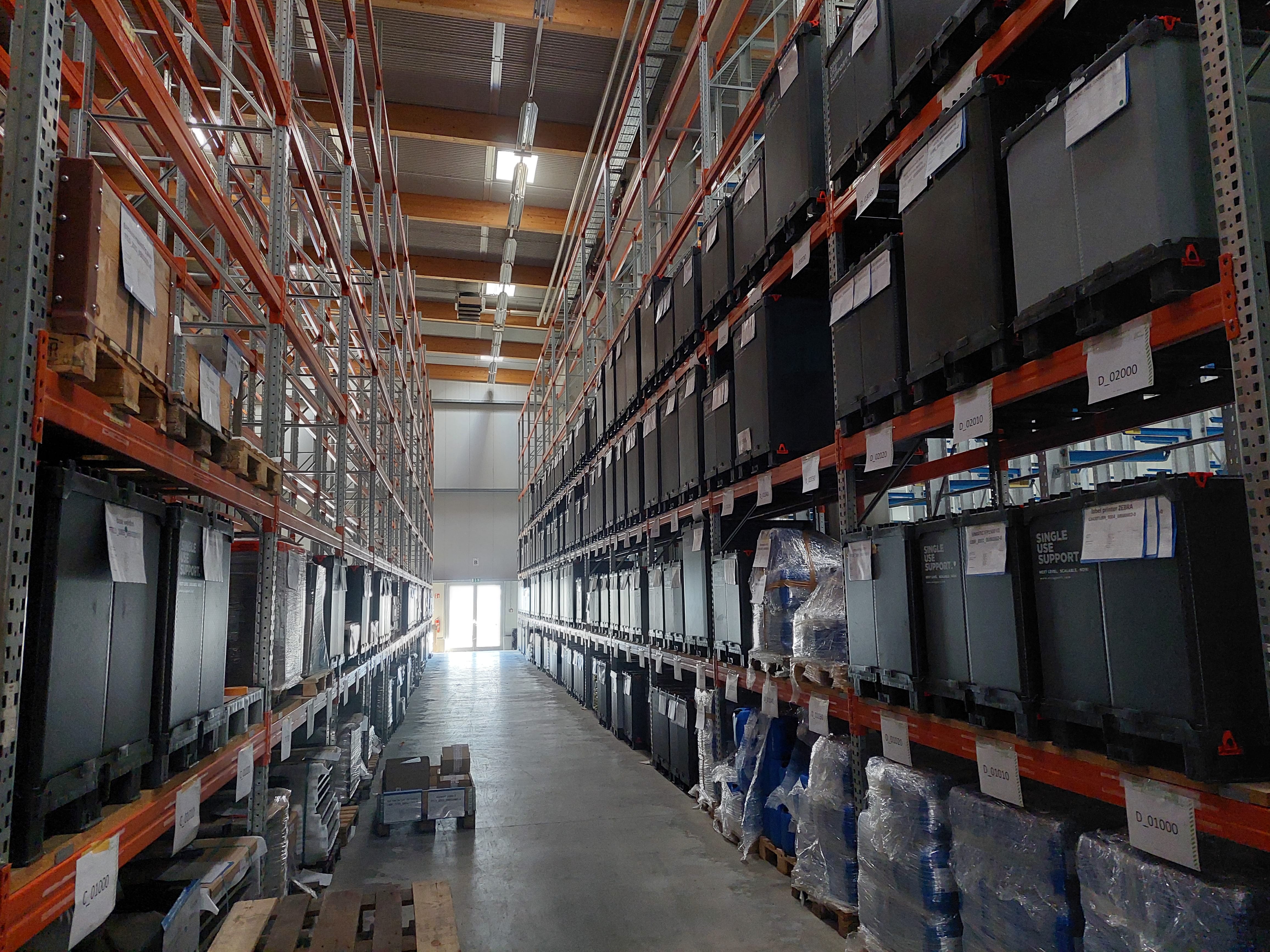
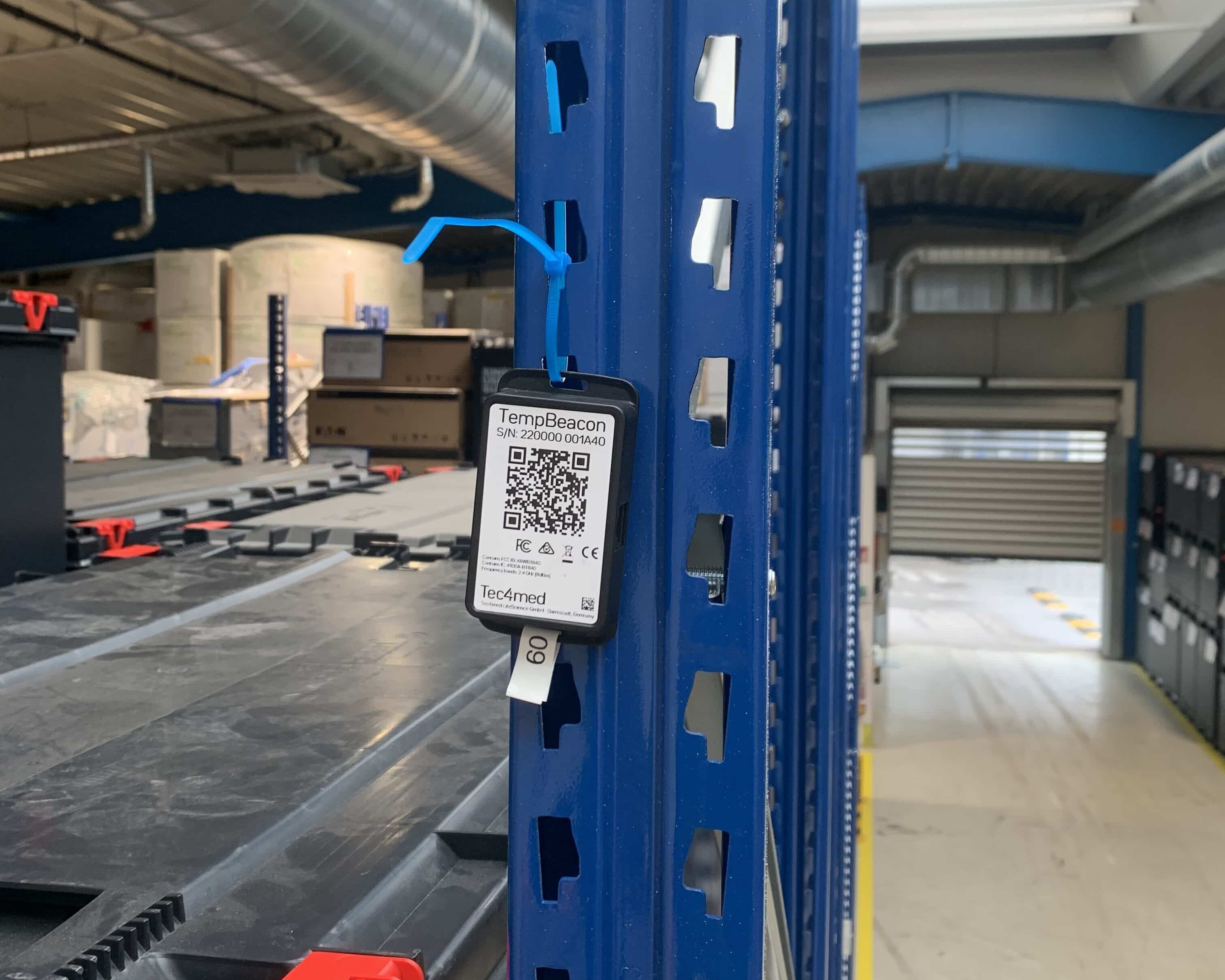
Installing the TempBeacons was also straightforward and flexible: The devices were strategically placed in various locations, including on shelves and high racks, as well as near windows – particularly at previously identified hot and cold spots. Due to the on-site conditions (namely, a lack of Wi-Fi infrastructure and insufficient cellular network reception) the use of the SmartHub for single-use support was ultimately ruled out.
Instead, an alternative workflow was established collaboratively: Since then, the TempBeacons have been scanned once a week using the Tec4App, reliably transferring the measurement data to the Tec4Cloud. This approach proved stable in practical operation while still ensuring a complete and seamless temperature history.
A key requirement during implementation was that continuous temperature monitoring not only meet quality and compliance requirements but also satisfy the highest standards for transparency, traceability, and data security. At the same time, the solution had to be flexible enough to adapt to changing spatial conditions and different temperature zones. Since the warehouses at Single Use Support are regularly remodeled or restructured, the positions of the TempBeacons must also be adjustable at any time.
Measurable Added Value for Quality, Transparency, and Compliance
By implementing our solution, Single Use Support was able to sustainably optimize its warehousing processes. Critical products are now stored exclusively in warehouse areas where defined temperature limits can be reliably maintained. Thanks to the continuous and comprehensive recording of storage conditions, reliable evidence of actual temperature conditions is now available, which represents a decisive advantage both with regard to customers and during audits.
Continuous temperature monitoring has led to significantly greater transparency across all storage areas. Since then, temperature trends have been traceable at all times, which has noticeably strengthened quality assurance. Based on the temperature data collected, targeted optimizations were implemented in individual storage zones, for example, by retrofitting additional air conditioning to ensure stable temperature conditions.
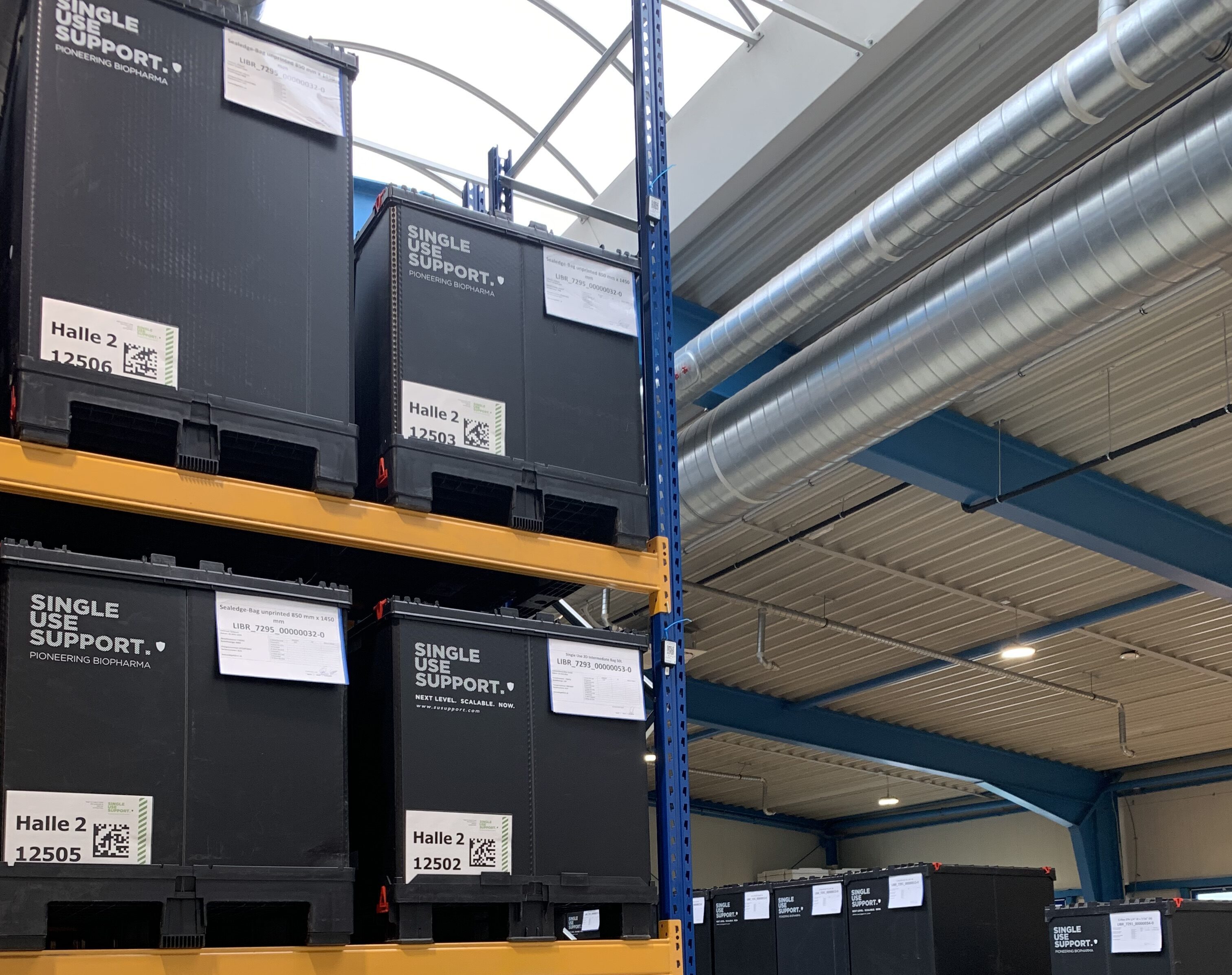
If temperature deviations are detected, Single Use Support initiates a clearly defined evaluation process. This involves systematically analyzing how long a deviation lasts, whether it is minor or critical, what external factors are at play, and which products are affected at that time. Technical causes, such as issues with the air conditioning system, are also investigated. Depending on the results, targeted measures are implemented, such as inspecting or adjusting the air conditioning system. This structured procedure is outlined in an internal SOP and ensures consistent, traceable action.
In the long term, this integrated solution creates significant added value for warehousing and quality processes. Continuous temperature monitoring sustainably enhances product safety and minimizes the risk of quality losses. It also supports ongoing compliance with regulatory and quality requirements through a robust, always-available database. The temperature data collected also provides a sound basis for decision-making regarding operational and strategic measures. Overall, the solution enables sustainable optimization of the warehouse environment as well as targeted risk minimization throughout the entire warehousing process.